Invisible vs. Receiver-in-Canal: Which Hearing Aids Fit Moderate Hearing Loss in Jacksonville
November 21st,
2025
If you're struggling to follow conversations at normal volume or finding yourself turning up the television more often, you might be experiencing moderate hearing loss. This stage occurs when the quietest sounds you can hear fall between 26 and 40 decibels, and it's typically when hearing aids become most beneficial.
For people facing this challenge, two popular hearing aids for moderate hearing loss Jacksonville stand out: invisible hearing aids and receiver-in-canal devices. Understanding the differences between these styles can help you make the right choice.
Understanding Moderate Hearing Loss
Moderate hearing loss means you have difficulty hearing speech at normal conversational levels. You might miss parts of what people are saying, especially in busy places like restaurants or family gatherings.
At this stage, hearing aids can make a meaningful difference in your daily life. Both invisible and receiver-in-canal hearing aids work well for moderate hearing loss, but they offer different advantages depending on what matters most to you.
What Are Invisible Hearing Aids?
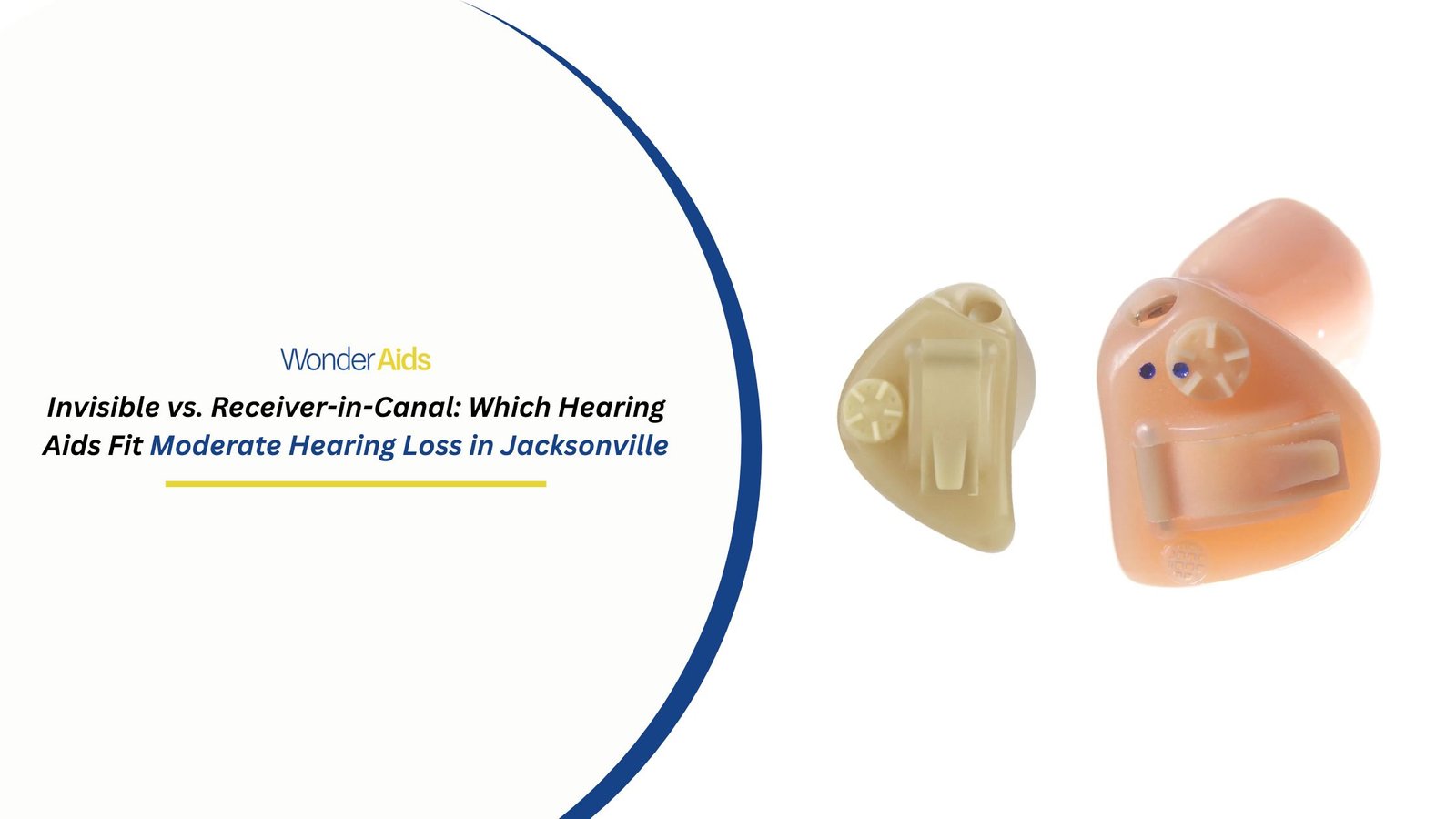
Invisible-in-the-canal hearing aids are custom molded and these hearing aids for moderate hearing loss Jacksonville fit deep inside the ear canal, which makes them completely hidden from view. These devices are exactly what their name suggests—virtually undetectable when you're wearing them. They work best for people with mild to moderate hearing loss and normal ear canal size.
The biggest draw is discretion. Many people appreciate wearing these devices without anyone noticing. They're custom-fitted to your ear canal, which usually means a comfortable fit throughout the day. Because they sit deep in the canal, they provide a more natural hearing experience since they take advantage of your ear's natural shape to collect sound.
However, there are tradeoffs. Due to their small size, these hearing aids generally lack smartphone apps or Bluetooth connectivity. If you're hoping to stream phone calls or music directly to your hearing aids, invisible models might not be the right fit. They also require good dexterity to insert and remove, and they need regular cleaning to prevent wax buildup.
What Are Receiver-in-Canal Hearing Aids?
Receiver-in-canal Hearing aids have a piece that sits behind your ear and a speaker that rests directly in your ear canal, connected by a thin wire. This design keeps the main electronics outside your ear while delivering sound directly into the canal.
As the most popular style on the market, these hearing aids for moderate hearing loss Jacksonville typically feature the newest technology first. This means you'll have access to Bluetooth streaming, smartphone apps, and advanced noise reduction. These devices are smaller and sleeker than traditional behind-the-ear options, which makes them fairly discreet while still being slightly visible.
The flexibility is another strong point. These hearing aids accommodate mild to severe hearing loss. If your hearing loss progresses over time, these devices can often be adjusted to accommodate the change without needing a completely new hearing aid.
Making the Choice for Your Lifestyle
Think about your daily routine when choosing between these two styles. If you spend time on phone calls, video meetings, or enjoy streaming music and podcasts, receiver-in-canal hearing aids offer connectivity features that enhance those experiences. The Bluetooth capability means you can take calls hands-free and enjoy media without disturbing others.
If appearance is your primary concern and you don't need wireless features, invisible hearing aids might be the better option. They're perfect for people who want to address their hearing loss without drawing attention to their devices.
You should consider the climate too. The warm, humid weather means your hearing aids will be exposed to moisture. Receiver-in-canal devices are generally easier to clean and maintain since the main electronics sit outside your ear. Invisible hearing aids require more careful maintenance to keep the receiver clear of wax and debris.
Finding the Right Fit
Both invisible and receiver-in-canal hearing aids for moderate hearing loss Jacksonville can effectively address moderate hearing loss, but they serve different priorities. Invisible hearing aids excel at discretion and natural sound quality, while receiver-in-canal devices offer better connectivity and adaptability. The right choice depends on whether you value invisible aesthetics or prefer advanced features and easier maintenance.
Visiting a local hearing specialist is the best next step. They can assess your specific hearing loss, discuss your lifestyle needs, and help you try different styles. Many hearing centers offer demonstrations so you can experience how different devices perform in real situations.
Your hearing affects every conversation and connection in your day. Whether you choose the discretion of invisible hearing aids or the versatility of receiver-in-canal devices, taking action to address your moderate hearing loss will open up clearer sound.