Top Hearing Aids for Severe Hearing Loss in Jacksonville: A Complete Guide
October 14th,
2025
If you or someone you love struggles with serious hearing loss, choosing the right hearing aid can feel overwhelming. In Jacksonville, where traffic noise, humidity, and community events make auditory clarity extra important, the stakes are high. That’s why finding Hearing Aids for severe hearing loss in Jacksonville is so important for everyday life.
In this guide, I’ll walk you through the top hearing aid options available. You’ll learn what to look for, what trade-offs exist, and how to pick something that works well day to day (not just on paper).
Understanding Severe Hearing Loss & What It Demands
Severe hearing loss means that many normal sounds (speech, background noise, environmental cues) are very attenuated or even inaudible without amplification. You’ll often see audiograms showing thresholds around 70–90 dBHL or more.
In practice, that means:
- You’ll need devices that offer strong amplification (gain) without distortion.
- The system must handle background noise and sudden loud sounds well.
- Battery life, feedback control, and durability (especially in Florida’s humidity) matter a lot.
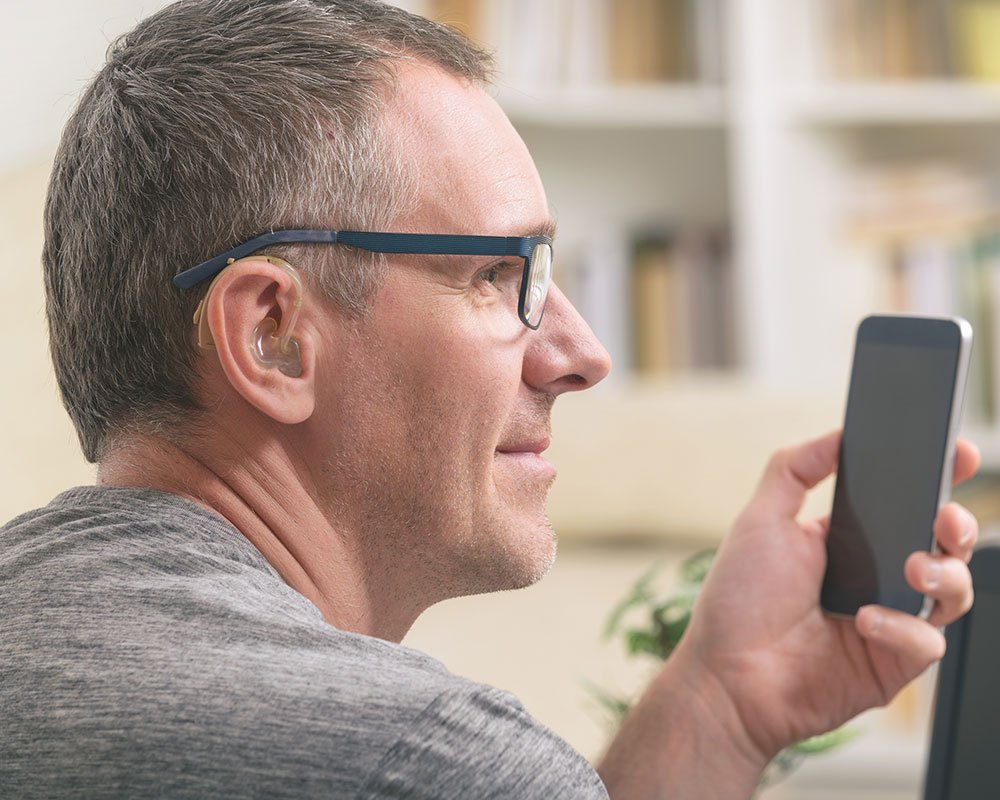
Also, not every aid is equally suited to severe loss—small “in-canal” types might struggle to deliver enough power or manage feedback. That is why many people with severe hearing loss go for In-The-Ear (ITE), Behind-The-Ear (BTE), or power BTE.
ITE (In-The-Ear) Models: A Good Middle Ground
ITE models (In-The-Ear)— These are custom molded to sit partly or fully in the outer ear. Because they are larger than in-canal models, they can hold stronger electronics, better batteries, and more controls. That makes them a strong choice among hearing aids for severe hearing loss in Jacksonville, especially for moderate to severe hearing loss (like “full-shell” ITE). ITE devices trade off invisibility (they are more visible) but offer more power and usability. They’re easier to handle, have room for volume wheels or program buttons, and can be more robust. If someone with severe hearing loss wants something that balances power and ease of use, ITE is often a smart option.
BTE / Power BTE: Workhorses for Severe Loss
For many with severe hearing loss, Behind-The-Ear (BTE) or Power BTE / Super-Power BTE is the safest bet. Why?
- BTEs can house larger amplifiers and stronger speakers (receivers).
- They have more room for a battery/recharge system and more robust circuitry.
- Feedback is easier to manage because the microphone and speaker are physically separated.
- They are easier to maintain and repair (less risk from earwax).
In Jacksonville, many clinics work with BTEs because they offer flexibility and reliability. Some newer BTEs include streaming, chargeable batteries, telecoil features, directional microphones, etc.
When Basic Amplification Isn’t Enough
If even the best hearing aids struggle, or if you have a combined (mixed) hearing loss, these more advanced solutions may come into play:
Cochlear implants / hybrid electro-acoustic stimulation: When your inner ear can’t respond well, a cochlear implant may be needed. Electric acoustic stimulation (EAS) combines a hearing aid and an implant for certain frequency ranges.
Bone-anchored hearing aids (BAHA / implantable bone conduction): Useful when conventional aids don’t help due to structural issues.
Power assist / special high output programs: Some modern aids (e.g., Phonak’s high-power lines) include modes specially designed for severe or profound loss, with cleaner gain and richer sound.
How to Choose & Test Before You Commit
Here are user-friendly tips people in Jacksonville should know:
- Always ask for a trial period (30 days or so)—you need to live with the device.
- Bring environments with you—restaurants, outdoor roads, meeting rooms.
- Test different programs (quiet, noise, streaming) and see which your brain handles best.
- Track battery life in real conditions (heat, humidity)—if it dies too soon, it’s not a fit.
- Revisit fine-tuning—after a few weeks, your hearing changes as your brain adapts.
- Ask about repairs, cleaning, and warranty locally.
Matching Power, Comfort & Local Support
When we narrow the topic to hearing aids for severe hearing loss in Jacksonville, the right solution tends to be one that balances high power, good electronics, and practical support infrastructure. ITE models can play a strong role if built for power and backed by good service. But super-power BTEs often remain the workhorses for the toughest cases. Advanced options (cochlear, bone conduction) are the safety nets.